
Formaldehyde in the Home: Health Effects and How to Reduce It in Hong Kong
Formaldehyde is one of the most common indoor air pollutants and one of the least visible. It is released by new furniture, renovation materials and some textiles, and small, sealed Hong Kong flats concentrate it. Here is what it does and how to bring levels down.

What Formaldehyde Is and Why It Matters
Formaldehyde (CH2O) is a colourless gas with a sharp smell. It occurs naturally at low levels and is also made industrially for resins, adhesives and coatings.
The International Agency for Research on Cancer, part of the World Health Organization, classifies formaldehyde as carcinogenic to humans. The US National Cancer Institute summarises the evidence in its formaldehyde fact sheet.
The WHO guidelines for indoor air quality set a short-term guideline of 0.1 mg per cubic metre. Newly furnished or renovated homes can exceed it.
A new-home smell is not a sign of freshness. It is the smell of materials releasing chemicals into the air.
Where Formaldehyde Hides in Hong Kong Homes
The US EPA lists pressed-wood products as a major indoor source.
Why Hong Kong Homes Are Particularly Vulnerable
Flats are small, so the same cabinet releases the same gas into far less air. Concentration rises as floor area falls.
Heat and humidity speed up off-gassing from resins and adhesives. Frequent renovation, driven by the rental market, restarts the cycle every few years.
Many high-rise flats rely on air conditioning with the windows shut, so indoor air is recirculated and pollutants are not flushed out.
Formaldehyde in Numbers
The reference points worth knowing.
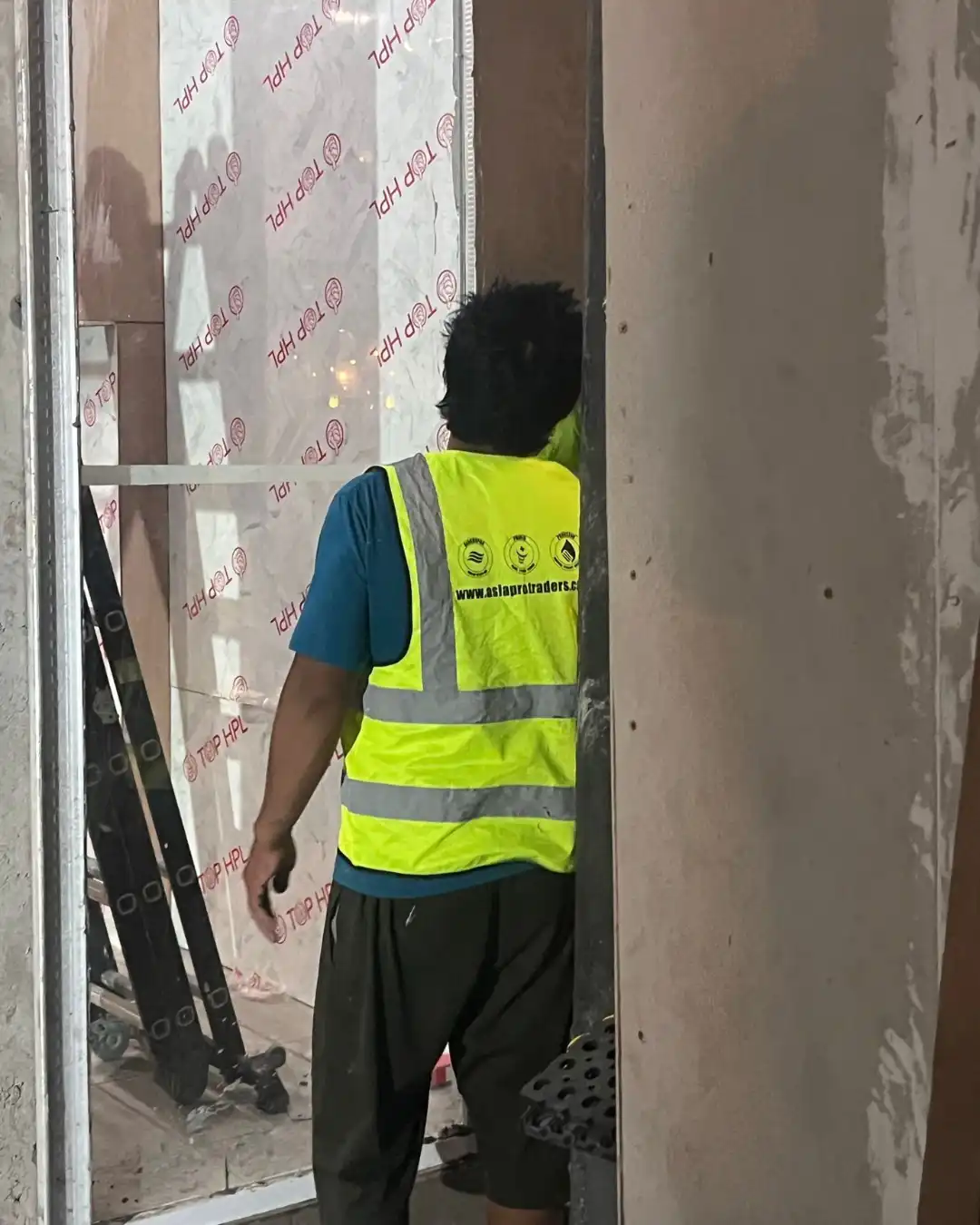
Just Renovated or Moved In?
Clear the Dust Before You Settle
Post-renovation deep cleaning removes the fine dust that carries chemical residues through a new home.
Health Effects of Formaldehyde Exposure
Symptoms are often mistaken for seasonal allergies or a cold, which delays action.
| Exposure | Typical Effects | Who Is Most at Risk |
|---|---|---|
| ⏱️ Short term | Stinging eyes, sore throat, cough, headache | Everyone in a newly fitted home |
| 📆 Repeated | Persistent irritation, worsening asthma and allergy symptoms | People with asthma or allergies |
| ⏳ Long term | Increased cancer risk at sustained high exposure | Occupational and heavily exposed groups |
| 👶 Sensitive groups | Stronger reactions at lower levels | Children, older adults and pregnant women |
How to Test for Formaldehyde in Your Home
Hong Kong's Indoor Air Quality Management Programme sets objectives that include formaldehyde. See the IAQ Information Centre.
For a home, there are three practical options: passive sampling kits that are sent to a laboratory, electronic monitors that give a real-time indication, and professional testing by an accredited service.
Test in the first six months after a renovation or a large furniture delivery, when off-gassing is highest, and test with windows closed for a realistic reading.
How to Reduce Formaldehyde Levels
Tackle the source first, then dilute and remove what remains.
Ventilate
Open windows daily, and for long periods in the first months after renovation.
Choose Low-Emission Materials
Solid wood, low-VOC paints and boards certified to low-emission standards.
Control Heat and Humidity
Cooler, drier air slows off-gassing. Keep air conditioners clean and draining properly.
Remove Dust
Household dust holds chemical residues. Deep cleaning and clean soft furnishings reduce the reservoir.
How Proclean Hong Kong Can Help
We do not test for or remove formaldehyde. We remove the dust and soiling that hold pollutants, and we keep the equipment that moves your air clean.
For the wider picture, read the benefits of clean air at home and airborne mould in Hong Kong homes.
Common Questions
How long does formaldehyde off-gassing last?
It is strongest in the first six months and declines over time. Some materials release low levels for years.
Do plants or charcoal bags remove formaldehyde?
Their effect in a real room is small. Ventilation and source control do far more.
Do air purifiers help?
Units with activated carbon can reduce levels, but they cannot keep up with a strong source.
Does cleaning remove formaldehyde?
Cleaning removes dust that holds residues. It does not stop materials from emitting, so ventilation is still needed.
Proclean Hong Kong
Cleaner Air Starts with a Cleaner Home
Post-renovation and seasonal deep cleaning, plus aircon cleaning, across Hong Kong. Open Monday to Sunday, 8am to 8pm.