
Working at Height: Safe Aircon Servicing in Hong Kong High-Rises
Rooftop plant, ledge-mounted condensers and ceiling units above atriums are daily work for AirconPro. Here is how our technicians service air conditioning at height safely, and why planned maintenance keeps everyone out of emergency callouts.

Why Aircon Work in Hong Kong Means Working at Height
Hong Kong is a vertical city. Most air conditioning equipment sits where it is hardest to reach: on roofs, on external ledges several floors up, or above high ceilings in lobbies, sports halls and plant rooms.
The Hong Kong Observatory describes May to August as hot and humid, so units run almost without a break. Equipment that works that hard needs regular servicing, and servicing it means getting a trained person safely to the unit.
At AirconPro, part of Proclean Hong Kong, working at height is a planned, equipped and supervised activity on every job.
If the access is not safe, the job does not start. That rule protects our technicians, your tenants and your building.
The Access Challenges We Deal With Every Week
Each site is different. These are the situations our teams plan for most often.
How Our Technicians Stay Safe at Every Height
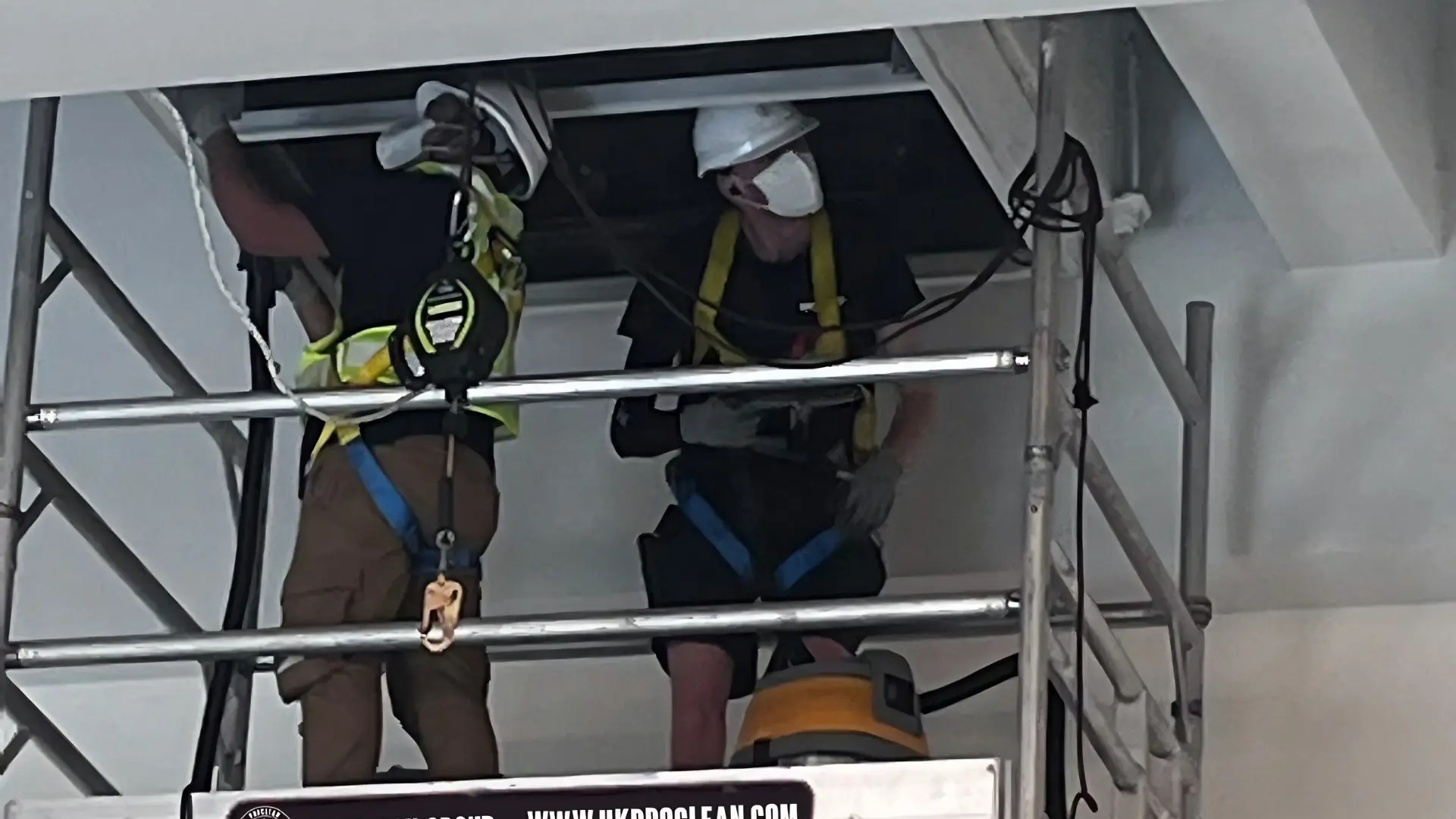
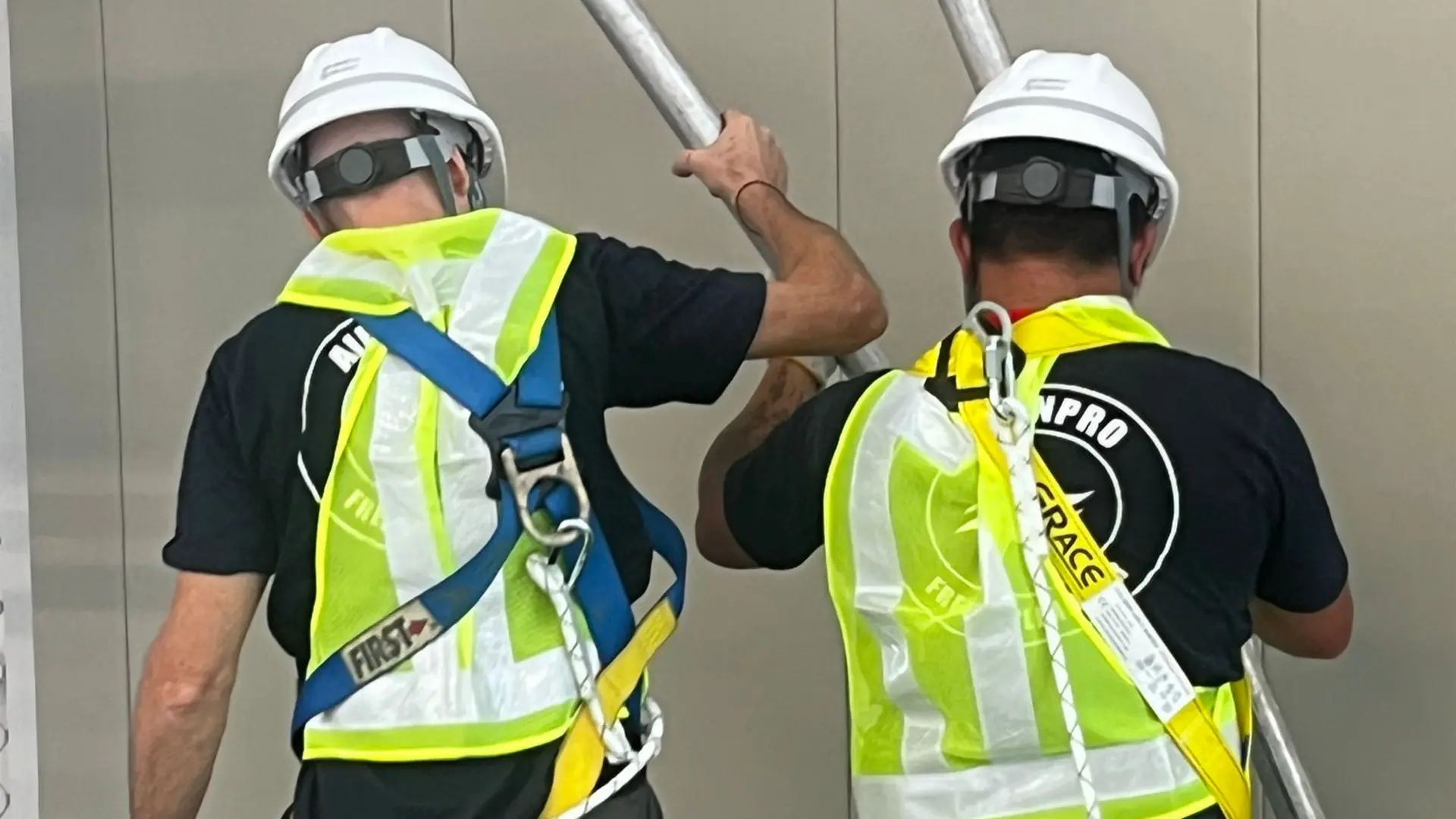
Every technician working at height wears a full-body harness rated to EN361, a safety helmet and non-slip footwear. Lanyards are attached to verified anchor points before anyone moves into position.
Before each elevated job the team completes a documented risk assessment covering the access route, weather, anchor points, equipment condition and communication. Our approach follows the Labour Department's occupational safety guidance and the training standards promoted by the Occupational Safety and Health Council.
Read more about the qualifications and training behind our senior technicians.
Safety and Service in Numbers
The figures that shape every elevated aircon job we take on.
Hard-to-Reach Units?
We Bring the Access Equipment
Send us a photo of the unit and its location on WhatsApp. We will confirm the access method and book a visit anywhere in Hong Kong.
Planned Maintenance Means Safer Service Calls
A neglected system tends to fail at the worst moment: in peak summer, needing urgent access to an elevated unit under time pressure. Emergency callouts carry more risk because there is less time to prepare.
A unit that is serviced on schedule is serviced on our terms. Access is planned, weather is checked and the right equipment is on site. That is safer for the technician and cheaper for the owner.
For buildings with fan coil units and ductwork, the same logic applies. See our guide to fan coil unit and duct cleaning.
What an AirconPro Maintenance Visit Covers
Every visit is documented, so owners and facility managers build a clear service record over time.
| Check | What We Do | Why It Matters |
|---|---|---|
| 🧽 Filters | Clean or replace | Blocked filters are the most common cause of weak cooling |
| ❄️ Coils | Inspect and clean evaporator and condenser | Fouled coils raise running costs and harbour mould |
| 🌡️ Refrigerant | Check levels and look for leaks | Low gas damages the compressor over time |
| 💧 Drainage | Clear the condensate drain | Blocked drains cause leaks and mould growth |
| ⚡ Electrics | Inspect connections | Loose connections are a fire risk |
| ✅ Performance | Run a full cooling cycle | Confirms output, thermostat response and airflow |
Warning Signs Your Aircon Needs Attention
Most problems give clear signals before they become failures. Book a visit if you notice any of these.
Weak Cooling
The room takes much longer to cool than it used to.
Musty Smell
A sign of dirty coils, blocked drainage or mould inside the unit.
Water Dripping Indoors
Usually a blocked condensate drain.
Higher Electricity Bills
A drop in efficiency shows on the bill before the unit fails. The EMSD energy label scheme explains how efficiency is rated.
Book the Right Aircon Service
AirconPro services residential and commercial systems across Hong Kong, from a single split unit to a multi-floor building.
Common Questions
Do you service units on external ledges?
Yes. We assess the access first and use harnesses, anchor points and the right platform for the location.
Do you bring your own scaffolding?
For high ceilings we bring a mobile scaffold tower and set it up ourselves. Tell us the ceiling height when you book.
What happens if the weather turns?
Outdoor work at height is paused or rescheduled when wind, rain or a typhoon signal makes it unsafe.
How often should aircon be serviced in Hong Kong?
Every six months for most homes and offices, and more often for units that run all day.
AirconPro by Proclean Hong Kong
Trained Specialists at Every Height
Residential and commercial aircon servicing across Hong Kong, from rooftop plant to high-rise ledges. Open Monday to Sunday, 8am to 8pm.