
Fan Coil Unit and Duct Cleaning in Hong Kong: Better Air, Lower Bills
Fan coil units and ductwork run almost all year in Hong Kong. The more dust, mould and bacteria they collect, the harder they work and the more they cost to run. Here is what goes wrong, how we clean them and how often to book.

What Is a Fan Coil Unit and Why Does It Get Dirty?
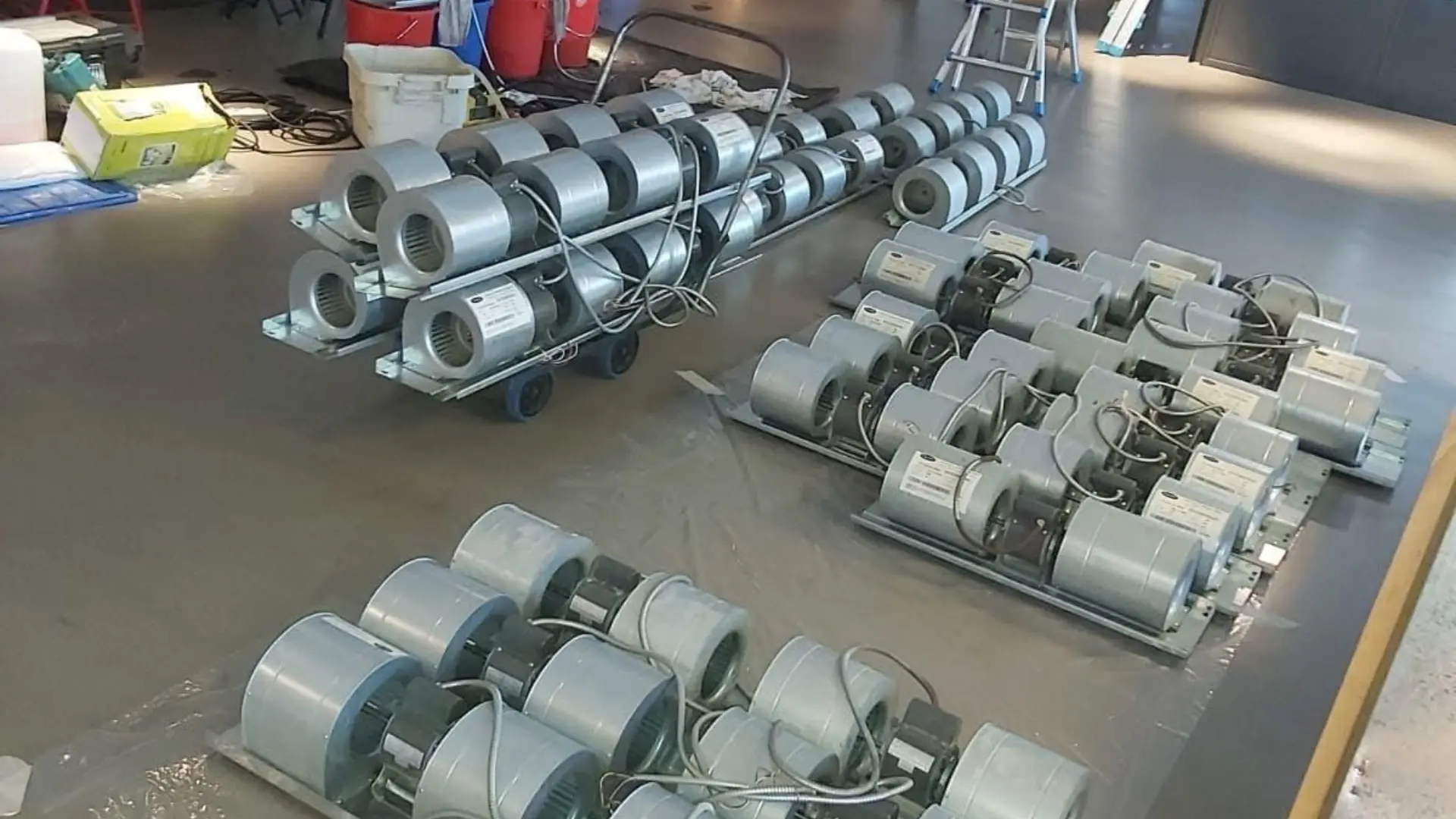
A fan coil unit (FCU) is the indoor part of an air conditioning system. A fan draws room air across a cold coil, cools it and pushes it back into the room, either directly or through ducts.
The coil is wet whenever the unit runs. Dust sticks to it, the drain pan holds standing water, and the blower wheel collects a layer of grime. In Hong Kong's humidity that mix becomes a breeding ground for mould and bacteria.
Connected ductwork makes it worse. Anything growing in the unit is carried along the duct and delivered to every room it serves.
A fan coil unit moves all the air in the room through itself many times a day. Whatever is inside it ends up in the air you breathe.
The Real Cost of a Neglected Fan Coil Unit
Skipping FCU and duct cleaning costs more than a musty smell from the vents.
Warning Signs Your FCU or Ducts Need Cleaning
Do not wait for a breakdown. Book a clean if you notice reduced or uneven airflow, a musty smell when the system starts, visible dust around vent grilles, or electricity bills rising with no change in use.
Worsening allergy or breathing symptoms in rooms served by one unit are another strong signal. The US Environmental Protection Agency's introduction to indoor air quality explains how indoor pollutants affect health.
In Hong Kong, the Environmental Protection Department's Indoor Air Quality Information Centre publishes the local objectives for offices and public places.
Fan Coil Cleaning in Numbers
A simple schedule that suits most Hong Kong homes and offices.
Weak Airflow or Musty Vents?
Get Your Fan Coil Units Checked
Tell us how many units you have and when they were last cleaned. We will quote and schedule the work around your opening hours.
The AirconPro Fan Coil Unit Cleaning Process
A structured six-step process restores performance without damaging components.
| Step | What We Do | Result |
|---|---|---|
| 1️⃣ Power isolation | Electrical supply is safely isolated | Safe working conditions |
| 2️⃣ Coil and fins | Dust and biological deposits removed | Full heat exchange restored |
| 3️⃣ Drain pan | Cleaned and sanitised | No standing water or mould |
| 4️⃣ Fan and blower | Blower wheel cleaned and inspected | Stronger, quieter airflow |
| 5️⃣ Ducts | Inspected and cleared with high-efficiency vacuum equipment | Clean air delivered to every room |
| 6️⃣ System test | Airflow, cooling and drainage verified | Confirmed performance |
Residential and Commercial Systems Need Different Care
Most Hong Kong flats use split type or ceiling type fan coil units. They are quick to service, and cleaning them twice a year keeps a home's air fresh. Start with a split type clean and service.
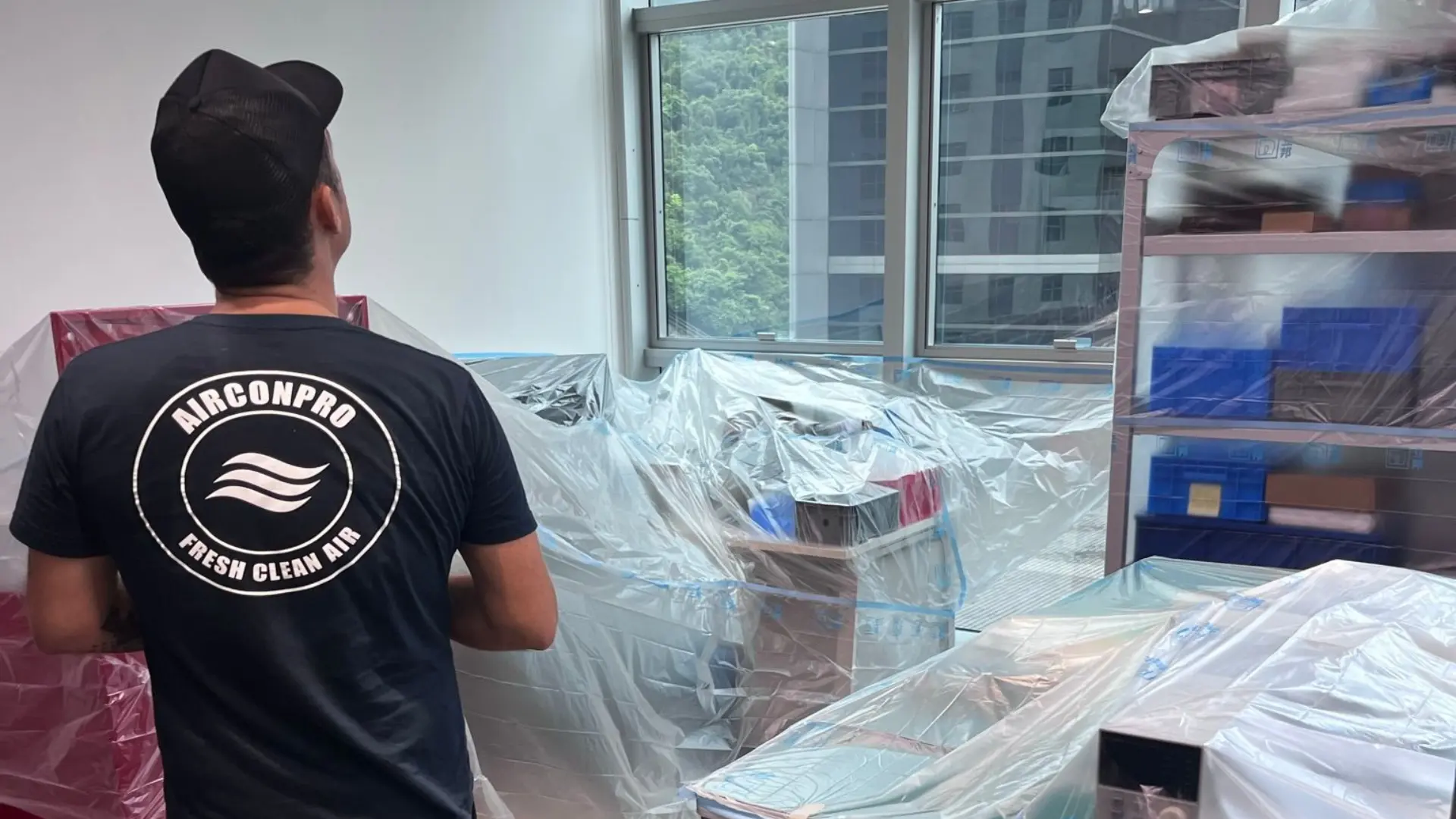
Offices, shops, restaurants and hotels usually run central systems with air handling units and long duct runs. These need planned access, out-of-hours work and full records. See our air handling unit service and commercial maintenance.
We use Ecolab cleaning solutions on every job. Read why in our article on Ecolab EPA-registered products.
How Often Should Fan Coil Units Be Cleaned in Hong Kong?
Industry bodies such as ASHRAE and NADCA publish maintenance and duct cleaning standards. Local conditions push Hong Kong towards the frequent end.
Year-Round Operation
Systems here rarely rest, so deposits build faster than in temperate climates.
High Humidity
Wet coils grow mould quickly, especially from June to September.
Urban Dust
Dense districts mean more particles drawn into every unit.
Our Recommendation
Clean every six months, ideally in April and October, either side of the humid season.
Why Choose AirconPro
Fan coil and duct cleaning is one of our core services across homes, offices and institutions.
Common Questions
How long does a fan coil unit clean take?
It depends on the unit type and access. Tell us the number of units and we will give you a time estimate with the quote.
Will cleaning lower my electricity bill?
A clean coil exchanges heat more easily, so the system reaches temperature sooner and runs less.
Do ducts always need cleaning?
Not every visit. We inspect them and clean when dust or contamination is visible.
Can you work outside office hours?
Yes. We are open Monday to Sunday, 8am to 8pm, and schedule commercial work around your operations.
AirconPro by Proclean Hong Kong
Enhance Your Indoor Comfort
Fan coil unit, duct and aircon cleaning for homes and businesses across Hong Kong. Open Monday to Sunday, 8am to 8pm.